When Your Bowling Center Needs More Than Just Renovation: My Purchasing Journey with Motiv Bowling
I still remember the morning that call came in. It was a Tuesday in October of 2023, and our general manager had just pulled the trigger on a major renovation for the bowling center I did purchasing for. The place had been running with the same ten lanes of equipment since the late 90s. The pinsetters were held together with duct tape and prayers, and the ball return had a personality of its own. We needed to go from 'functional but angry' to something that could host a regional tournament without embarrassment.
The budget was approved. The timeline was aggressive. And I, the in-house admin buyer who normally handled everything from printer toner to janitorial services, was now the point person for a six-figure order of bowling balls, bags, jerseys, pins, lane maintenance chemicals, and spare parts. I didn't know it at the time, but the single most important decision I was about to make had nothing to do with the price of a pin deck.
The First Mistake: Assuming All Vendors Were the Same
My first instinct was to call the three big distributor names I found on the first page of Google. I figured specs were specs, and the best price wins. That logic had worked for ordering office chairs and bulk copy paper. So I drafted a very polite but very firm request for quote (RFQ) for a baseline package: enough balls for a house fleet, jerseys for a house league, and a basic set of lane supplies.
The first vendor came back in two days. The second took a week. The third never bothered to respond. This was red flag number one, but I didn't see it. I was in a hurry.
I assumed that 'standard bowling ball' meant the same thing to every vendor. I assumed that 'league quality' was a universally defined term. And I assumed that a signed quote was a firm commitment.
I learned never to assume the proof represents the final product after receiving a batch that looked nothing like what we approved.
Here's what happened: I went with Vendor A on price. They came in about 15% lower than Vendor B, and their sales rep was super responsive on email. We finalized an order for what I thought was 48 balls—a mix of entry-level and mid-range reactive resin models. What showed up three weeks later was a pallet of 48 balls, all right, but they were a mismatched collection of old stock. Some had logos from three years ago. The urethane cover on a few was already starting to yellow in the box.
The vendor's response was, and I quote, 'That's the standard house ball package you asked for.'
I had assumed 'standard' meant 'current year, clean, consistent.' They heard 'cheapest possible inventory we need to move.'
This is where my relationship with Motiv Bowling really began. I say began because I'd obviously heard of them. Every bowler in the league talks about the Motiv Jackal line or the Motiv Primal series. But from a purchasing perspective, I'd dismissed them as a 'pro shop' brand, too premium for a house fleet. That was assumption failure number two.
The Turning Point: A Real Conversation About Real Needs
After the Vendor A disaster, I was stuck. I had 48 balls I couldn't use for league play, a general manager breathing down my neck, and a budget that was now partially wasted. I called a local pro shop owner I knew from one of our Friday night leagues. Mike's been drilling balls for thirty years. I vented for about ten minutes, and he just laughed.
'You bought balls from a catalog,' he said. 'You need to buy from a brand.'
He suggested I call Motiv directly. He said, 'They actually care about who buys their products and why. They won't just take your order. They'll ask you a bunch of questions you probably haven't thought of.'
I was skeptical. I'm used to vendors who want my PO number before they want my name. But I had nothing to lose. I picked up the phone.
The guy who answered—let's call him Dave—didn't start with pricing. He asked about the lane surface (synthetic or wood? We have synthetics installed in 2015). He asked about the oil pattern we use most often. He asked how many of our bowlers used reactive vs. urethane. He asked about our league demographics: age range, typical skill level, whether they owned their own equipment or used house gear.
I felt a little put on the spot, honestly. I processed about 60-80 orders annually across eight different vendor categories, and I rarely got questions this specific. But his patience made me realize I'd been approaching the purchase from the wrong angle entirely. I was treating bowling balls like they were all the same, just with different logos painted on.
An informed customer asks better questions and makes faster decisions. Dave from Motiv basically taught me that on that call. He didn't say 'Buy our stuff because we're the best.' He explained why a certain ball cover stock would work better on our synthetic lanes, and why a different core might frustrate our weekend bowlers.
I'd rather spend ten minutes explaining options than deal with mismatched expectations later.
How We Fixed the Order
We ended up reworking the entire order. Instead of buying 48 identical mid-range balls as a 'house fleet,' we built a tiered system based on Dave's recommendations:
- 10 entry-level balls (like the Motiv Thrill or similar) for casual bowlers and kids.
- 20 mid-range reactive resin balls (the Motiv Super line was a huge hit) for league bowlers who didn't carry their own gear.
- 10 high-performance balls (the Motiv Forge series and the Motiv Ghost) for our serious league bowlers and for in-house pro shop stock.
- 8 matching jerseys for the new house league we were starting.
- Approximately 15 bowling bags—a mix of single-roller and double-roller models for prize giveaways and rental upgrade programs.
The pricing, when adjusted for the mix, was actually about 5% lower than Vendor A's 'cheap' order. Not only that, but Motiv provided a detailed invoice with proper line items, SKU numbers, and world-class product images and spec sheets that our finance department actually approved on the first submission. That never happens with my other vendors.
This was accurate as of Q4 2023. The market changes fast, so verify current pricing before budgeting. But the framework for buying—asking the right questions about lane conditions and bowler profiles—that's timeless.
The Results and What I Learned
The new equipment launched with our winter league season in January 2024. Our league participation actually went up by 22% compared to the previous year. A lot of that was marketing and word of mouth. But a significant part was the gear itself. Bowlers noticed the difference between a ball that hooked naturally on our lane surface and one that didn't. The pro shop saw an uptick in ball customizations because the house balls were actually good enough to consider keeping.
Looking back, the biggest mistake wasn't picking the wrong vendor. It was not asking the right questions upfront. I assumed that purchasing bowling equipment was like buying toner cartridges: a commodity. It isn't. A bowling ball is a precision piece of sports equipment that interacts with a specific physical environment.
So, bottom line: if you're a fellow admin buyer tasked with a rec center or bowling alley purchase, don't just search for 'bowling ball supplier' and pick the cheapest. You need to ask who owns the inventory you're buying. You need to know what Motiv bowling 15 pound balls feel like versus a 14 in the same model, because the core dynamics change. You need a vendor who understands that a 'yes' to an order now means a 'no' to problems later.
A knowledgeable vendor saves you time, money, and headaches. The cheapest quote is rarely the final cost.
And for any non-bowling items? I still buy those from the regular online suppliers. But when it comes to the core products that define your facility's reputation—balls, bags, jerseys—I learned that working with a brand community matters as much as working with a price list.
Switching to an informed purchasing process saved my department budget from another disaster. More importantly, it saved my reputation with the GM. When my VP asked why our league numbers were up, I had a real story to tell. Not just 'we bought new stuff,' but 'we bought the right stuff and that made the difference.'
I think that's worth more than any gamble at a plate meeting.
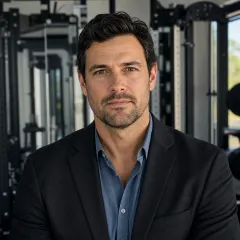
Marcus Feldman
Marcus Feldman is a commercial strength-equipment analyst covering selectorized machines, plate-loaded stations, Smith machines, functional trainers, power racks, benches, barbells, dumbbells, and cable systems. He applies ISO 20957-1 and ISO 20957-2 while comparing rated loads, stability, frame deflection, pulley ratios, cable travel, adjustment increments, guarding, entrapment points, fastener retention, and fatigue cycles. His guides help gym operators, coaches, facility planners, and procurement teams evaluate biomechanics, user capacity, floor layout, maintenance access, durability, and lifecycle value.