Motiv Tank Bowling Ball vs. Performance Balls: The Total Cost Guide (Plus Dumbbells vs. Cable Machine)
In my role coordinating equipment orders for motiv-bowling.com, I get asked one odd question more than you'd expect. It's not "Which ball hooks the most?" It's not "What's your return policy?" It's "who is the speaker in the video?" We'll get to that. The actual question that matters, in my view, is a total-cost question. Which Motiv bowling ball belongs in your lineup—and how should your bowlers train to support it? Let's compare two pairs: the Motiv Tank vs. a hook-heavy performance ball, and dumbbells vs. a cable machine for back work.
Motiv Tank Bowling Ball vs. Performance Balls
The Motiv Tank bowling ball is the most dependable straight-line tool we stock. A common mistake is to treat it like a beginner ball. It's actually a spare ball. The Tank won't give you a big hook. It doesn't try to. In the bowling world, that's a feature, not a limitation.
Dimension 1: What each ball does differently
When you compare a Motiv Tank to an asymmetric hook monster like the Jackal Ambush, you're comparing two tools, not two quality levels. The Tank is polyester, so it skids past dry boards and stays on line. The Jackal is designed to read the mid-lane and create friction. If a bowler on a 45-foot house shot throws the Jackal at a ten-pin, the ball can hook too early and miss the spot. The Tank simply doesn't do that. Both are USBC-approved, but approval isn't the differentiator.
This is where total-cost thinking starts. Missing a makeable spare doesn't just cost a frame. It costs match points, averages, maybe a tournament cash spot. To be fair, a skilled bowler can flatten their hand out and make a performance ball go straight. But that's a compensation, not a solution.
Dimension 2: Long-term owner cost
Let's talk TCO. The unit price of a Tank is lower than a high-performance ball, but the price difference is only part of the story. A performance ball with a reactive coverstock needs resurfacing every 40–60 games if you want the reaction to stay consistent. A Tank can go hundreds of games with basic cleaning. For a bowling center, that means less shop time, less technician time, and fewer "it used to hook" complaints.
Then there's the emergency side. In March 2024, a league customer's only spare ball cracked an hour before a team final. We paid $90 in courier fees and delivered a drilled Tank by 2 p.m. That $90 was annoying, but the alternative—a forfeit—would have cost the team $500 in entry fees. On the TCO ledger, the Tank was almost free.
Dimension 3: Stocking strategy
Pro shops and centers should carry both. But they should stock the Tank first. A bowler who struggles with weak hooks on wood lanes will pick up spares better with a straight ball. A performance ball is for the bowler who already owns the spare game. If you can carry only one Motiv ball from motiv-bowling.com, start with the Tank. I know that sounds counterintuitive—buyers love the flashy hook balls. But the Tank sells quietly and doesn't come back for repairs.
Bottom line for the ball comparison: if your value equation is "most wins per dollar spent," a spare-specific ball often beats the strongest hook ball in the rotation. The Tank is not exciting. It's profitable.
Back Exercises with Dumbbells vs. Cable Machine: The Bowler's Training Tradeoff
The ball only does its part if the bowler's back can hold posture over 12 frames. When we advise centers, we get asked whether to install a cable machine or buy dumbbells. That's a real budget question. Let's compare the two.
Dimension A: Entry cost and space
A set of adjustable dumbbells costs a few hundred dollars and takes maybe six square feet of floor. A functional trainer with a cable machine can run several thousand dollars, plus shipping, setup, and a much bigger footprint. For a center with a small fitness nook, the dumbbells are the obvious first purchase. They're also easier to move when the landlord changes the lease.
Now, if you already have a cable machine, use it. I have mixed feelings about buying a new one, though. On one hand, constant tension is great for shoulder rehab. On the other hand, the money for a cable machine could fund two more Motiv bowling balls. For most centers, that's a better investment.
Dimension B: Which pattern actually helps bowlers?
When someone searches "back exercises with dumbbells," they're usually looking for rows, pullovers, and scapular support. Dumbbells allow each arm to move independently, which is good for bowlers because they need to control the ball side and balance side differently. A heavy dumbbell row also trains anti-rotation, so the lower back stays firm during the swing.
Cable machines excel at low-to-high rotations, which can mirror the arm swing path of a bowling release. But they require the user to set the pulley height and maintain form. In a public gym area, people misuse cables constantly. That's not a knock on the machine; it's a coaching cost. If your staff doesn't have time to coach, dumbbells are simpler to keep safe.
Dimension C: Maintenance and injury risk
Dumbbells are nearly bulletproof. A cable machine has pulleys, cables, handles, and weight stacks—many parts that wear out. You don't need to be an equipment expert to know when a dumbbell is worn out. Cables require inspection.
For injury prevention, both are useful. The best equipment is the one your members can use with confidence. In my experience, a straightforward dumbbell program beats an expensive cable machine that sits unused—or worse, used with bad form.
My training recommendation is practical: buy dumbbells first, and use a cable machine only if the facility already has one. The repair cost of a cable machine can exceed a full set of rubber-head dumbbells that lasts a decade.
Who Is the Speaker in the Video?
If you found this page because your search history literally says "who is the speaker in the video," I'll answer that directly. On the motiv-bowling.com product walkthrough, the speaker is our head pro-shop technician, not a professional voice actor. He's a regional-level bowler, so his delivery has the right mix of technical detail and "let me show you" energy.
But the more useful question is: what is the speaker actually telling you? In our videos, the real message is always about matching a ball to a lane condition and a bowler's physical reality. That's why the Motiv Tank gets mentioned so often: it's the no-mystery solution for spares.
Bottom Line: Apply TCO to Every Order
At the start, I said total cost matters more than sticker price. Let's bring it together.
The cheapest ball is not the one with the lowest wholesale price. It's the one that reduces your cost per spare, per repair, and per lost night of bowling.
List prices from Q1 2025: a Motiv Tank is significantly below a Jackal, but ordering a Tank is only half the answer. Look at your center's missed-spare rate and pro shop labor hours. Put a few Tanks in the emergency bag. Add a dumbbell station if you don't have one. If you already have a cable machine, train your staff to teach one row and one rotation movement.
Looking back, I should have pushed this harder earlier. We kept popular hook balls in our warehouse and treated the Tank like an afterthought. After a few late-night panic orders, we changed the policy: every team bag gets a spare ball. Honestly, no center is gonna regret having a Tank behind the counter.
Your mileage may vary—if you're a tiny pro shop with no storage, stocking every Tank color isn't the right call. But if you manage a busy center, the Tank is the quietest asset you can add. And if you were wondering about the video speaker, now you know. The better answer is the data: buy the tool that solves the problem, not the one that looks best on display.
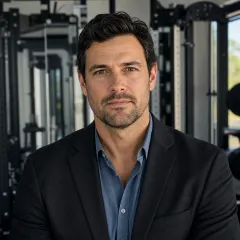
Marcus Feldman
Marcus Feldman is a commercial strength-equipment analyst covering selectorized machines, plate-loaded stations, Smith machines, functional trainers, power racks, benches, barbells, dumbbells, and cable systems. He applies ISO 20957-1 and ISO 20957-2 while comparing rated loads, stability, frame deflection, pulley ratios, cable travel, adjustment increments, guarding, entrapment points, fastener retention, and fatigue cycles. His guides help gym operators, coaches, facility planners, and procurement teams evaluate biomechanics, user capacity, floor layout, maintenance access, durability, and lifecycle value.